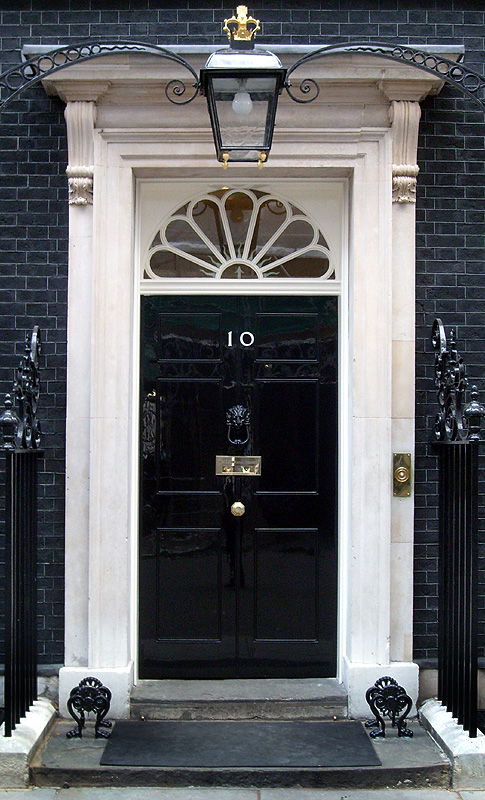
Well folks, I'm back again with another new post! Had a fantastic time in Barcelona and Dublin (thanks for asking), but it has truly wiped me out and furthermore I need another holiday to get over the fun times that was had in those wonderful cities! While I was away No.10 Downing Street finally announced that we are indeed having a General Election on the 6th May 2010 - surprise, surprise! In the past few weeks my Twitter account is being followed by quite a few MPs/election candidates and the main political parties. I'm following the three main parties - Conservatives, Labour and Liberal Democrats just in case you didn't know - on Twitter, just to see what they are saying. The Conservatives are bombarding my twitter feed, especially when the Prime Minister's Question Time is on! However, as the media use the term "internet election" to describe this election, is it really working as a way to communicate to the masses?
As my Twitter feed is being regularly filled with what Nick Clegg is saying about Gordon Brown or David Cameron, or vice verse it makes me think who is actually reading all of this and thinking "hmmm maybe I'll vote for them?" The Guardian's Emily Bell had an interesting article about how many MPs are embracing the worlds of Twitter and Facebook but she also questioned the justification of them using it.
Only last week, we saw the negatives of MPs using Twitter and this is a classic case of how NOT to use your social media networking sites... if only he went to our lecture about how to protect your reputation online! But then again, he was up to mischievious for over 16 months.
As soon as the election campaign officially started the leaflets started pouring through the letterbox. I haven't seen any in Scotland yet, but Northern Ireland have their campaign posters up already. In the next couple of weeks we'll probably have politicians coming around our doors asking who we'll be voting for and how they will change things for that area. These are all traditional tools that politicians have used for years. to woo voters Their main issue for the past twenty years is apathy. The young first time voters are their main targets this time and with the overload of politicians Twittering and Facebooking, does this make them attractive to the young voter? Time will tell! I agree with Emily Bell and think that this is a so-called "internet election" we have a long way to go to fully understand and implement it in future elections.
Cutlip et al. (2006:411) argues that,
Robert Leach (93: 2009) "... democracy requires open government and freedom of information, which provides massive opportunities but creates some problems for those engaged in PR." He puts it nicely in a nutshell!
Do you think politicians (those who do not slag voters, that is) should use Twitter or other social networking sites to communicate to prospective voters? Or is it just a gimick for politicians to be seen using the recent social networking fad to look cool in front of the kids?
The moral of this general election story is not to ignore or annoy the old people as they are the ones who'll be out voting on 6th May 2010! This should be an interesting election and I personally look forward to the next few issues of Private Eye - bring it on!

As my Twitter feed is being regularly filled with what Nick Clegg is saying about Gordon Brown or David Cameron, or vice verse it makes me think who is actually reading all of this and thinking "hmmm maybe I'll vote for them?" The Guardian's Emily Bell had an interesting article about how many MPs are embracing the worlds of Twitter and Facebook but she also questioned the justification of them using it.
The Obama campaign is often held up as a model of "internet politics" in action. But while the web was expertly exploited by it as a tool for fundraising and organisation, since the election there has been a lack of insight into how to deal with the genie in all its forms once released from the bottle. Hence the deep disappointment of supporters who felt included by the campaign but ignored by the government.
Only last week, we saw the negatives of MPs using Twitter and this is a classic case of how NOT to use your social media networking sites... if only he went to our lecture about how to protect your reputation online! But then again, he was up to mischievious for over 16 months.
As soon as the election campaign officially started the leaflets started pouring through the letterbox. I haven't seen any in Scotland yet, but Northern Ireland have their campaign posters up already. In the next couple of weeks we'll probably have politicians coming around our doors asking who we'll be voting for and how they will change things for that area. These are all traditional tools that politicians have used for years. to woo voters Their main issue for the past twenty years is apathy. The young first time voters are their main targets this time and with the overload of politicians Twittering and Facebooking, does this make them attractive to the young voter? Time will tell! I agree with Emily Bell and think that this is a so-called "internet election" we have a long way to go to fully understand and implement it in future elections.

Cutlip et al. (2006:411) argues that,
In a real sense, the purpose of democracy itself closely matches the purpose of public relations. Successful democratic government maintains responsive relationships with constituents, based on mutual understanding and two-way communications.
Robert Leach (93: 2009) "... democracy requires open government and freedom of information, which provides massive opportunities but creates some problems for those engaged in PR." He puts it nicely in a nutshell!
Do you think politicians (those who do not slag voters, that is) should use Twitter or other social networking sites to communicate to prospective voters? Or is it just a gimick for politicians to be seen using the recent social networking fad to look cool in front of the kids?

The moral of this general election story is not to ignore or annoy the old people as they are the ones who'll be out voting on 6th May 2010! This should be an interesting election and I personally look forward to the next few issues of Private Eye - bring it on!